

7 Signs Your Dishwasher Circulation Pump Is Failing
7 Signs Your Dishwasher Circulation Pump Is Failing
dishwasher-circulation-pump-failing-signs
Learn the warning signs of a failing dishwasher circulation pump, from dirty dishes to burning smells. Plus repair tips, costs, and FAQs for DIY homeowners.
Dirty dishes after a full cycle? Strange grinding noises coming from the tub?
Before you blame your detergent or start shopping for a brand-new appliance, consider the usual suspect: your circulation pump.
As the heart of your dishwasher, this pump drives the water pressure that blasts away grime. Here are the warning signs it’s on its last legs — and how to fix them.
1. Dishes Come Out Dirty
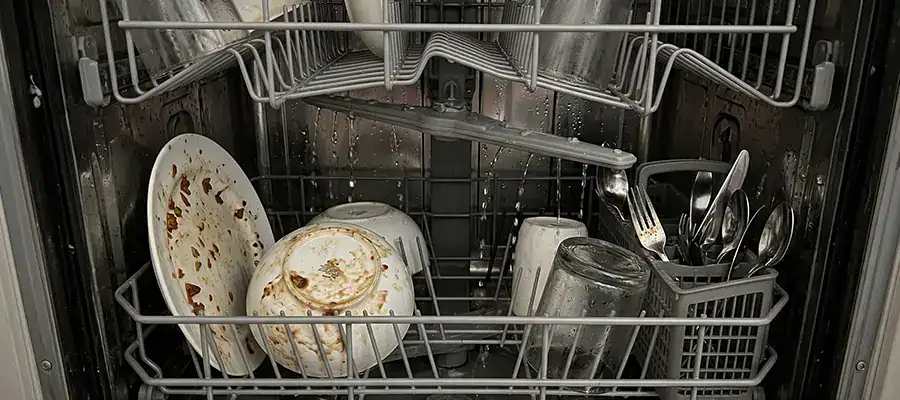
The most obvious sign of a failing circulation pump? Dishes that still have food and residue after a full cycle.
A healthy pump forces water through the spray arms with enough pressure to clean every rack. When the pump weakens, water pressure drops. The spray arms can’t reach the top rack or blast away stuck-on food.
First, rule out the simple stuff:
- Clogged spray arm holes
- A dirty filter
- Improper loading (dishes blocking the spray arms)
If you’ve cleaned everything and the dishes still come out dirty, a weak pump is the likely suspect.
2. Unusual Noises During the Cycle
Your dishwasher isn’t silent, but it shouldn’t sound like an unmuffled Harley, either. A failing circulation pump often makes a racket:
- Grinding
- Humming
- Buzzing
- Squealing
These noises usually point to worn bearings, a failing motor, or debris caught in the pump. A humming sound with no water movement often means the pump motor is trying to run but can’t.
Turn off the dishwasher and check for trapped debris like broken glass or food chunks. If the noise continues after cleaning, the pump may be failing.
3. Standing Water at the Bottom
A little water at the bottom of your dishwasher after a cycle is normal. A pool of standing water is not.
While standing water often points to a drain issue, a failing circulation pump can also be the cause. If the pump can’t move water properly through the system, it collects at the bottom.
Check these things first:
- Clogged drain filter
- Kinked or blocked drain hose
- Clogged garbage disposal (if connected)
If your drain line is clear and standing water remains, turn your attention to the circulation pump.
4. Weak or No Water Spray
Open your dishwasher mid-cycle. You should hear and see water spraying against the door. If the spray is weak — or there’s no spray at all — the circulation pump may not be pushing enough water.
This ties directly to dirty dishes. No pressure means no cleaning power.
Quick checks:
- Spin the spray arms by hand to confirm they move freely
- Clear any clogged spray holes with a toothpick
- Make sure the water supply valve is fully open
If everything’s clear and the spray is still weak, the pump is likely the problem.
5. Error Codes on the Display
Many newer dishwashers have digital displays that flag pump problems. If your model shows an error code, grab your owner’s manual and look it up.
Common codes related to circulation pump issues point to:
- Motor failure
- Low water flow
- Electrical faults
Error codes take the guesswork out of diagnosis. Write down the code before you start any repair.
6. Dishwasher Trips the Breaker
If running your dishwasher trips the circuit breaker, a failing pump motor could be shorting out.
As pump motors wear out, they can draw excessive current or develop electrical faults. This trips the breaker as a safety measure.
Safety first: Turn off the dishwasher’s power at the breaker before inspecting anything. If you’re not comfortable working with electrical components, call a licensed technician.
7. Burning Smell During Operation
A burning or overheating smell coming from your dishwasher often means the pump motor is overheating or its windings are burning out.
Shut down the dishwasher immediately and cut the power at the breaker. A burning smell can lead to bigger electrical problems or even a fire hazard.
This sign almost always means the pump — or the entire pump motor — needs to be replaced.
Should You Repair or Replace?
Once you’ve confirmed the pump is failing, you have two choices:
- Replace the pump: A replacement circulation pump typically costs $50–$300. If your dishwasher is under 7 years old, it’s worth repairing.
- Replace the dishwasher: If your unit is over 10 years old and the repair costs more than half the price of a new one, replacement makes more sense.
Many intermediate DIYers can swap a circulation pump in a couple of hours with basic tools. Check for a video walkthrough for your specific model before you start, and source the replacement part from a local appliance supplier to avoid shipping delays.
FAQs: Failing Dishwasher Circulation Pump
Q: How long does a dishwasher circulation pump last?
Most circulation pumps last 7–10 years with normal use. Hard water, common in parts of Southern California, can shorten that lifespan by causing mineral buildup inside the pump.
Q: Can I run my dishwasher with a failing circulation pump?
You can, but you shouldn’t. Running it with a failing pump often means dirty dishes and can cause further damage. If you notice a burning smell or the breaker trips, stop using it immediately.
Q: How much does it cost to replace a dishwasher circulation pump?
The part usually costs $50–$300. Professional labor can add $150–$300. Doing it yourself saves you the labor cost entirely.
Q: Is a circulation pump the same as a drain pump?
No. The circulation pump pushes water through the spray arms to clean dishes. The drain pump removes dirty water at the end of the cycle. Some dishwashers combine both functions, but most have two separate pumps.
Q: How do I know if it’s the pump or the motor?
In many dishwashers, the pump and motor are one unit. A humming sound with no water movement usually points to the motor. Weak spray with a working motor points to the pump itself.
Q: Can hard water damage my circulation pump?
Yes. Mineral deposits from hard water build up inside the pump and spray arms over time. Running a cleaning cycle with dishwasher-safe descaler every few months helps prevent buildup.
Q: Do I need special tools to replace a circulation pump?
Most jobs need only basic tools: a screwdriver, pliers, and a towel for spills. Always unplug the dishwasher and shut off the water supply first.
Q: Should I call a professional?
If you’re comfortable with basic repairs and follow safety steps, replacing a pump is a manageable DIY project. Call a licensed technician for electrical faults, persistent leaks, or if your dishwasher is still under warranty.
More Articles
0 Comments