
Air Conditioning Compressors: What They Do
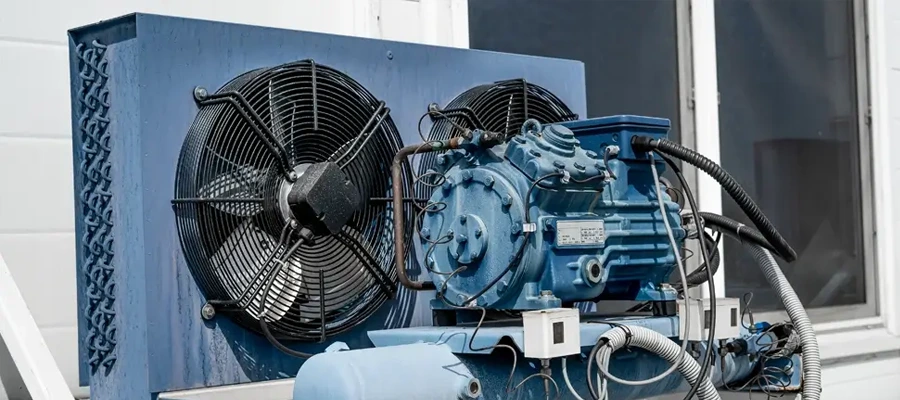
Air conditioning compressors are one of the key parts of your home cooling system. They help move heat out of your home so the air feels cool and comfortable inside.
What Is an AC Compressor?
An AC compressor is a mechanical component inside your air conditioner. Think of it as the “engine” that drives your cooling system. It:
- Pressurizes refrigerant gas
- Circulates the refrigerant through the AC system
- Enables heat to move from inside your house to the outdoors
Without it, your AC can’t move heat — which means no cooling.
How the Cooling Cycle Works
Here’s a simplified overview of what your compressor helps make happen:
- Refrigerant absorbs indoor heat and turns into a low-pressure gas.
- The compressor pressurizes the gas, raising its temperature.
- The hot, high-pressure gas goes to the condenser outside, where it cools and becomes a liquid.
- The refrigerant returns inside and repeats the cycle, removing heat from your home.
Types of Residential AC Compressors
Residential systems use different compressor designs. The type depends on the size and cost of the AC:
- Reciprocating – piston-driven
- Scroll – smooth and efficient
- Screw
- Rotary
- Centrifugal
Each type achieves the same goal: putting pressure on refrigerant to enable heat transfer.
Common AC Compressor Problems
Even with normal care, compressors can develop issues over time. Typical signs you might need service include:
Compressor Doesn’t Start
The motor or related electrical parts can fail.
Constant Cycling
If the compressor seems to run non-stop, there may be wiring or control problems.
Poor Cooling
Low refrigerant or compressor issues can limit cooling performance.
Overheating
Heat buildup can occur from electrical problems, dirty coils, or low refrigerant levels.
Maintenance & When to Call a Professional
Clean filters and coils regularly. This helps your compressor run longer and more efficiently.
If your AC isn’t cooling right or you notice strange behavior, contact an HVAC technician. Compressor work is typically not a DIY task.
Summary: Why Compressors Matter
- An AC compressor is central to your cooling system. It:
- Drives the refrigerant cycle
- Enables heat transfer
- Keeps your home comfortable
Without it, the rest of your air conditioner can’t function.
FAQs: About AC Compressors
Q: What does an AC compressor do?
An AC compressor pressurizes and circulates refrigerant through your air conditioning system. This process allows your AC to remove heat from inside your home and release it outdoors, helping your home stay cool.
Q:Why is the compressor considered the “heart” of an air conditioner?
The compressor is often called the “heart” because it powers the refrigerant cycle. Without it, refrigerant can’t move through the system properly, meaning your AC won’t cool at all.
Q: What are the most common signs of a bad AC compressor?
Some of the most common signs include:
- Warm air blowing from vents
- Loud noises from the outdoor unit
- The AC turns on and off frequently
- Higher-than-normal energy bills
- The outdoor unit won’t start
Q: Can an AC still run if the compressor is failing?
Yes, sometimes the AC may still run for a while, but cooling will be weak or inconsistent. A failing compressor often leads to reduced efficiency and can eventually cause the system to stop cooling completely.
Q: What causes an AC compressor to fail?
Compressor failure can happen due to:
- Dirty condenser coils
- Low refrigerant levels
- Electrical issues
- Overheating
- Normal wear and tear over time
Q: How long do compressors usually last?
Most AC compressors last around 10 to 15 years, depending on system quality, maintenance, and how often the AC is used.
Q: Is it cheaper to repair or replace an AC compressor?
It depends on the age of your system and the cost of the repair. Compressor repairs can be expensive, and in many cases, homeowners choose replacement—especially if the unit is older or out of warranty.
Q: How can I help my AC compressor last longer?
You can extend compressor life by:
- Changing air filters regularly
- Keeping outdoor coils clean
- Scheduling yearly AC maintenance
- Avoiding running the system nonstop
- Fixing refrigerant leaks quickly
More Articles
0 Comments