
How to Keep Your Air Conditioner in Good Shape
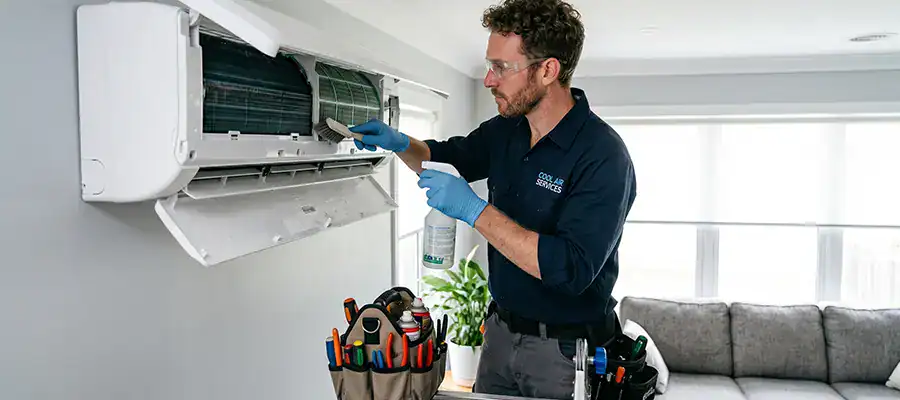
Regular air conditioner maintenance helps your system cool efficiently, run more quietly, and last longer. Replace or clean the filter regularly, keep the outdoor unit clear of debris, gently clean the condenser coils, check for unusual noises, and schedule a professional tune-up once a year.
Why Regular AC Maintenance Matters
Your air conditioner works hard. Really hard. It’s August. It’s hot. Really, really hot. When you look at the 10-day forecast in horror, hopefully your AC isn’t ready to call in sick.
A little regular maintenance can help keep it from becoming the one major household appliance that suddenly demands your attention and a very expensive service call.
For homeowners, basic AC upkeep isn’t complicated. Some jobs take only a few minutes, while others are best left to a licensed HVAC technician. The trick is knowing which is which.
A Little AC Maintenance Goes a Long Way
Think of air conditioner maintenance as preventive care for one of the hardest-working systems in your home. Regular attention can help you:
- Keep your home comfortable during hot weather.
- Improve airflow and energy efficiency.
- Prevent minor problems from becoming major repairs.
Simple maintenance tasks require little more than a replacement filter, a garden hose, and a few minutes of your time.
Start with the Air Filter
The humble air filter doesn’t get much glory, but it has an important job: catching dust, dirt, and other airborne particles before they make their way through your HVAC system.
A clogged filter restricts airflow and makes your AC work harder. It can also contribute to humming, whistling, or other unusual sounds.
- Check your filter every month, especially during periods of heavy use.
- Depending on the type of filter, household conditions, and manufacturer’s recommendations, the filter generally needs to be replaced every 1–3 months.
- If you have pets, allergies, or a particularly dusty home, you may need to change it more often.
If the filter looks like it has been collecting dust since the Dust Bowl days, it’s definitely time for a replacement.
Give the Outdoor Unit Some Breathing Room
Your outdoor condenser needs plenty of airflow to do its job. Leaves, grass clippings, dirt, and other debris can collect around the unit and restrict airflow.
Before summer gets into full swing:
- Turn off the power to the outdoor unit.
- Remove leaves, twigs, grass, and other debris around the condenser.
- Trim back plants and vegetation.
- Make sure nothing is leaning against or blocking the unit.
- Keep several feet of clearance around it whenever possible.
Be especially aware of vegetation. A hedge may look like a handy privacy screen, but your AC needs some breathing room.
If you use a fence or plants to help hide or muffle the unit, leave plenty of clearance for airflow.
Give Your AC Some Extra Attention After Wildfires and Santa Ana Winds
Southern California has a couple of weather events that can turn a clean air conditioner into a dust collector in a hurry. Wildfire ash, Santa Ana winds, blowing dust, leaves, and other debris can find their way into the outdoor condenser, coating the delicate fins.
After a particularly smoky or windy event, give your AC a quick inspection.
- Turn off the power to the outdoor unit first, then look for ash, dust, leaves, and other debris trapped around the condenser.
- If the coil is lightly soiled, gently rinse it with a garden hose. Never use a pressure washer, which can bend the fins and restrict airflow.
- Don’t forget to check your indoor filter. Wildfire smoke can put extra particles into the air, so check your HVAC filter after a smoke event and replace it if it’s dirty.
- During periods of poor air quality, you may need to check the filter more frequently than usual. The EPA recommends using the recirculate setting and a high-efficiency filter that is compatible with your system during wildfire smoke events.
And if your yard looks like someone dumped a giant bag of fireplace ashes on it, resist the urge to attack it with a leaf blower. Blowing ash back into the air is exactly what you don’t want. Wet-cleaning methods can help keep ash from becoming airborne.
If ash has heavily coated the condenser, the fins are damaged, or the unit isn’t cooling properly after a major event, have an HVAC professional inspect and clean it.
Clean the Condenser Coils
Dirty condenser coils make your AC work harder to release heat. Fortunately, cleaning the outside of the unit is a relatively simple maintenance job.
- With the power turned off, gently rinse the outdoor coil with a garden hose.
- Spray from the inside outward if your unit’s design allows access to the coil interior. Avoid using a pressure washer, which can bend the delicate fins.
- If the fins are bent, a fin comb can sometimes straighten them. Work gently—those fins are much easier to bend than they are to straighten.
For heavily soiled coils, skip the DIY heroics and call an HVAC professional.
Don’t Ignore Strange AC Noises
It’s normal for your air conditioner to make some noise. But if it suddenly sounds like it’s auditioning for a heavy-metal band, pay close attention.
Different noises can point to different problems:
- Rattling: Loose panels, screws, or debris.
- Buzzing: Loose components, a struggling motor, or an electrical problem.
- Squealing or screeching: A worn motor, bearing, or belt on older equipment.
- Clicking: A thermostat, relay, or other electrical component may be malfunctioning.
- Banging: A loose or damaged internal component.
- Grinding: Possible motor or bearing failure.
- Loud humming: A motor, capacitor, electrical component, or another mechanical problem.
You can safely investigate simple issues, such as loose panels or debris, after shutting off the unit’s power. However, persistent electrical buzzing, grinding, banging, or other alarming sounds need professional attention.
Check the Unit for Excessive Vibration
An air conditioner that vibrates excessively can be noisy and may put unnecessary stress on its components.
- Look at the outdoor unit while it is running. It should sit securely on its pad and operate without excessive shaking.
- If the unit appears tilted or unstable, have it inspected. Don’t try to shove or lift a large condenser back into place yourself.
- A properly installed vibration-isolation pad can help reduce noise in some situations, but it isn’t a substitute for fixing an underlying mechanical problem.
Keep the Condensate Drain Clear
Your AC removes moisture from the air as it cools your home. That water needs somewhere to go, which is where the condensate drain comes in.
A clogged drain can cause water to back up and potentially damage your home.
- Check the drain line periodically for obvious signs of blockage or standing water.
- If your system has a condensate drain pan, look for standing water, rust, algae, or other signs that something isn’t draining properly.
- If water is backing up or you’re not sure how to safely clear the drain, call an HVAC professional.
Give Your AC a Seasonal Checkup
Before the first major heat wave, spend a few minutes looking over your system.
Check that:
- The filter is clean.
- The outdoor unit is free of debris.
- Vegetation isn’t blocking airflow.
- The condenser coils aren’t heavily soiled.
- The unit isn’t making unusual noises.
- There are no obvious signs of water leaking around the indoor equipment.
- The thermostat is working properly.
These quick checks can help you spot a problem before your AC has to work overtime.
And that’s the ideal time to discover a problem, not at 4 p.m. on the hottest day of the year when every HVAC technician in Southern California is already booked for days.
When to Call an HVAC Professional
Some AC maintenance belongs firmly in the professional category. Call a licensed HVAC technician if you notice:
- Grinding, banging, or metal-on-metal sounds.
- Persistent electrical buzzing.
- Weak airflow or poor cooling.
- Refrigerant leaks or suspected low refrigerant.
- Repeated circuit-breaker trips.
- Water leaking from the indoor unit.
- A fan that won’t start or is running erratically.
- A compressor that struggles to start.
- A system that repeatedly freezes up.
Refrigerant and electrical repairs aren’t DIY projects. They require specialized equipment and, in many cases, proper licensing and certification.
There’s nothing wrong with being handy. There’s also nothing wrong with knowing when the smartest thing to do is to call in the professionals.
Schedule an Annual AC Tune-Up
Even a well-maintained air conditioner benefits from a professional inspection once a year.
A technician can inspect electrical connections, motors, refrigerant levels, airflow, coils, condensate components, and other parts that aren’t practical or safe for most homeowners to service themselves.
Scheduling the appointment before peak summer is also a smart move. You don’t want to discover that your AC needs attention when the forecast is for triple digits for days.
For Southern California homeowners, adding AC maintenance to the spring calendar is ideal.
A Little TLC Beats a Big Repair Bill
Your air conditioner shouldn’t be high-maintenance; it just needs a little attention now and then.
Replace the filter. Clear the weeds and leaves. Give the outdoor unit a gentle rinse. Pay attention when the normal hum suddenly becomes a rattle, buzz, or grinding noise. And let a professional handle the electrical, refrigerant, and complicated mechanical work.
Those few minutes of maintenance can make a big difference when Southern California inevitably turns up the heat. Your AC will be happier, your home will be more comfortable, and you’ll hopefully avoid the dreaded midsummer phone call that starts with, “How soon can you get here?”
FAQs: Maintaining Your Air Conditioner
Q: How often should I maintain my air conditioner?
Check the filter monthly and replace it as needed, generally every 1–3 months. Keep the outdoor unit clear of debris throughout the cooling season and gently clean the condenser coils as needed. A professional tune-up once a year is also recommended.
Q: Can I clean my AC myself?
Yes. Homeowners can safely handle basic maintenance, such as replacing the filter, removing debris around the outdoor unit, and gently rinsing the condenser coils after shutting off the power. Leave electrical, refrigerant, and complicated mechanical repairs to a licensed professional.
Q: How do I know if my AC needs a tune-up?
Poor cooling, weak airflow, unusual noises, excessive vibration, water leaks, or unusually high energy use can all indicate that your system needs attention. Even if everything seems fine, an annual professional inspection can catch problems before they become expensive repairs.
Q: Does a dirty air filter make an air conditioner work harder?
Yes. A clogged filter restricts airflow, which can make the system work harder and reduce cooling performance. Checking the filter monthly is one of the simplest things you can do to help your AC run efficiently.
Q: How can I make my outdoor AC unit quieter?
First, check for loose panels, debris, excessive vibration, and landscaping that may be interfering with airflow. Make sure the unit is stable and properly supported. If the noise persists or sounds like grinding, banging, or electrical buzzing, have it inspected by an HVAC professional.
Q: How often should I clean the outdoor AC unit?
Inspect it regularly and remove leaves, grass, and other debris whenever they accumulate. A gentle rinse of the condenser coils can be done as needed, particularly before the cooling season. Avoid pressure washers, which can damage the fins.
Q: Should I clean my AC after a wildfire or Santa Ana wind event?
Yes, especially if you can see ash, dust, or debris collected on the outdoor condenser. Turn off the power and gently rinse light buildup from the condenser with a garden hose, never a pressure washer. Also, check your indoor air filter, since wildfire smoke can load it with fine particles more quickly than normal. If the outdoor coil is heavily coated with ash or the AC isn’t cooling properly afterward, have a professional inspect it.
Q: How long can a well-maintained air conditioner last?
A properly maintained central air conditioner can often provide many years of service, although lifespan varies depending on the equipment, installation, climate, usage, and maintenance history. Regular maintenance won’t prevent every failure, but it can help catch problems early and keep the system operating efficiently for as long as possible.
More Articles
0 Comments