
How Ductless Air Conditioners Work to Cool Your Home
Keeping your Southern California home comfortable during the warmer months requires a reliable, efficient cooling system. While traditional central air conditioning relies on bulky, hidden ductwork, many older homes or modern additions lack the space for these systems. This often makes upgrading a complex and expensive ordeal.
Ductless air conditioners, also known as mini-split systems, offer a sleek, straightforward alternative. They provide targeted cooling without the need for a massive duct network. They are highly efficient, relatively easy to install, and perfectly suited for open-concept and townhome layouts.
How Ductless Air Conditioners Work to Cool Your Home
Let’s be honest: Southern California summers are a “dry heat” until you’re trying to sleep in a second-floor bedroom that feels like the inside of a rotisserie chicken. If your home wasn’t built with central air, you’ve probably spent time playing a high-stakes game of Tetris with heavy window air conditioners, unattractive portable units, or hoping that a single floor fan blowing in your face can somehow defy the laws of thermodynamics.
For many of us living in older homes that need the HVAC replaced or in a townhome with vaulted ceilings and no attic space, installing a traditional HVAC system is less of a convenience and more of an expensive construction nightmare.
Enter the ductless air conditioner (or mini-split). Think of it as the sleek, “wireless” version of home cooling. It’s quiet, incredibly efficient, and doesn’t require a sledgehammer to install. This guide breaks down how these systems work, why they’re a game-changer for the Golden State, and how you can finally stop living in a rotisserie.
What is a Ductless Mini-Split System?
A ductless mini-split system cools specific rooms, or “zones,” in your home. Unlike central air, which forces cool air through long, often leaky ducts, a ductless system delivers conditioned air directly into the space you want to cool.
The system consists of two primary components:
- The Outdoor Unit: This contains the compressor and condenser. It sits outside your home and is responsible for releasing the heat collected from inside.
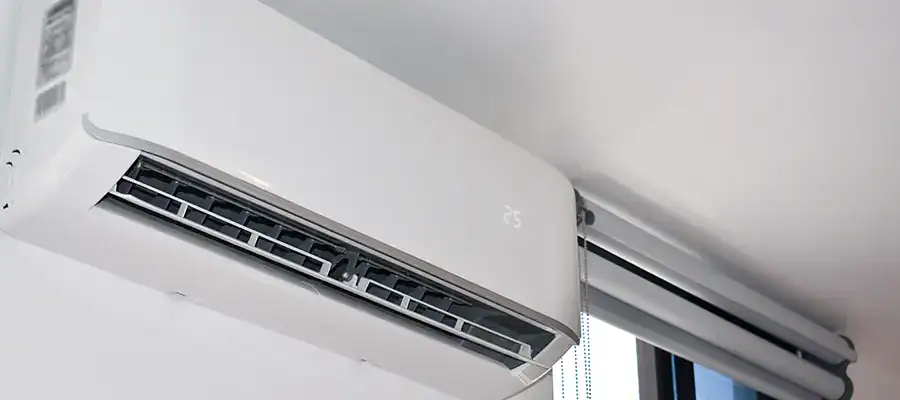
- The Indoor Unit: Mounted on a wall or ceiling, this unit houses the cooling coil and a quiet fan that distributes air.
These two parts are connected by a small conduit (usually requiring only a three-inch hole in the wall) that houses the power cable, refrigerant tubing, and a condensate drain line.
The Step-by-Step Cooling Process
Ductless systems rely on the circulation of refrigerant, a compound that absorbs and releases heat as it changes states. Here is how the cycle keeps your room cool:
- Heat Absorption: The indoor unit pulls warm air from the room and passes it over cold evaporator coils. The refrigerant inside absorbs heat and changes from a liquid to a gas.
- Air Distribution: Once the heat is removed, the unit’s fan blows the newly cooled air back into the room.
- Heat Transfer: The warm refrigerant gas travels through the conduit to the outdoor unit.
- Heat Release: The compressor pressurizes the gas, and a fan blows outside air across the condenser coils to disperse the heat.
- The Reset: The refrigerant cools back into a liquid and returns to the indoor unit, starting again.
Year-Round Comfort: The Heat Pump Advantage
Most modern ductless systems are actually heat pumps. Using a reversing valve allows the system to flip the cooling process. During Southern California’s mild winters, the unit extracts heat from outdoor air and transfers it indoors. This dual functionality makes mini-splits a cost-effective, year-round climate solution.
Key Benefits for Homeowners
1. Superior Energy Efficiency
Traditional ductwork can lose more than 30% of energy consumption due to leaks or poor insulation, especially when ducts run through hot attics. Ductless systems eliminate these “duct losses” entirely. By delivering air directly to the source, they use significantly less energy, resulting in lower monthly utility bills.
2. Flexible Zone Cooling
A single outdoor compressor can often support up to four indoor units. Since each indoor unit has its own thermostat, you can create “zones.” This means you can cool your living room or home office during the day while leaving the unused rooms uncooled, preventing you from wasting money on empty rooms.
3. Improved Air Quality
Traditional ducts are notorious for collecting dust, pollen, and pet dander, which are then circulated every time the AC kicks on. Ductless units feature multi-stage filtration systems that trap allergens and bacteria before they enter your air, providing a cleaner breathing environment.
Installation: DIY vs. Professional Help
If you are a handy homeowner, you may be tempted by DIY-specific kits. These come with pre-charged refrigerant lines and can be installed with basic tools. This is a budget-friendly option for simple, single-zone projects.
However, standard professional systems require handling high-voltage electrical work and specialized vacuuming of refrigerant lines. For multi-zone setups or premium brands, we strongly suggest hiring a licensed HVAC technician. A pro ensures the system is sized correctly for your square footage, complies with local building codes, and maintains your manufacturer’s warranty.
Simple Maintenance Tips
To keep your system running at peak performance for 15–20 years, follow these simple steps:
- Clean the Filters: Every 1–2 months, pop open the indoor panel, wash the mesh filters with mild soap, and let them dry completely before reinstalling.
- Clear the Outdoor Unit: Ensure at least two feet of clearance around the outdoor compressor. Remove leaves, weeds, or debris that might block airflow.
- Inspect the Conduit: Occasionally, check the line set connecting the units to ensure the insulation is intact and there are no visible leaks.
FAQs: How Ductless Air Conditioners Work
Q: Can a ductless system also heat my home?
Yes. Most are heat pumps that can reverse the refrigerant flow to provide highly efficient heating during the winter months.
Q: How long do ductless mini-split systems last?
With basic maintenance, a high-quality system will typically last 15 to 20 years, about the same as a traditional HVAC system.
Q: Are ductless air conditioners noisy?
Not at all. Because the noisy compressor stays outside, the indoor units operate at a whisper, usually quieter than a standard refrigerator. They are significantly quieter than central AC systems.
Q: Do I need a dedicated electrical circuit?
Yes. Most systems require a dedicated 110V or 220V circuit. We recommend a licensed electrician handle this to ensure your home’s panel can safely support the load.
Q: How do I know what size system I need?
Capacity is measured in BTUs. The size you need depends on your room’s square footage, ceiling height, and insulation. An HVAC pro can perform a “load calculation” to find your perfect match.
Q: Can I install the outdoor unit on my roof?
Yes. The outdoor unit can be placed on a concrete pad, mounted to an exterior wall with brackets, or installed on a flat roof, provided it is level and accessible for service.
Q: Will a ductless system increase my home’s value?
Absolutely. Homebuyers value energy-efficient upgrades and the convenience of “smart” zoned climate control, making your property more competitive on the market.
Q: Can I control my ductless system from my phone?
Yes, most modern ductless systems come with built-in Wi-Fi or have “smart” adapters available. Using a dedicated app, you can turn your AC on before you get home. Many systems also integrate with Amazon Alexa or Google Home, allowing for voice commands. These apps provide real-time energy usage data, helping you track your savings and adjust your cooling habits to avoid tiered electricity “peak” charges.
More Articles
0 Comments